Spread the Love
Last updated on June 02, 2025What is a Dieline? A Complete Guide
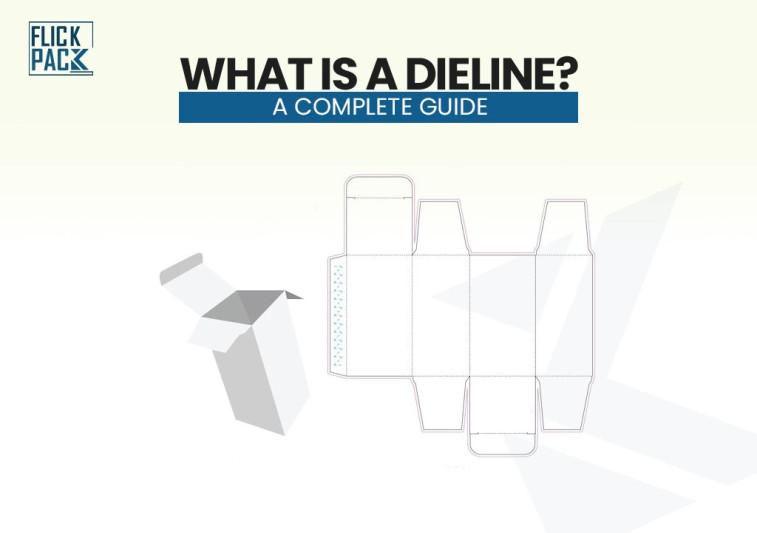
Are you curious to know, “What is a Dieline?” In the packaging and printing industries, the term "dieline" refers to a template used to assure the proper arrangement of a final physical product. To people who are new to this, it is a technical term that is the basic and essential thing to consider before the creation of your bespoke package. Packaging designers construct these dielines depending on the size, shape and printing specifications of every box size and shape.

Order This Kind Of Boxes In Best Quality From Us
What is a Dieline in Packaging?
All packaging companies first measure the box arrangements and then draw the box design using either manual or digital design tools. These measurements serve as frameworks and graphic representations of the package you plan to build.
In packaging, a dieline is basically a diagram or sketch that shows the folds and cut lines on a flattened package. A dieline in printing is a blueprint that specifies the exact arrangement of the package. The lines in these templates and prints represent the measurements and gaps on each side of the box. It is suitable for various types of packaging, such as bags, cartons and packaging envelopes.

Order This Kind Of Boxes In Best Quality From Us
The Role of Dieline in Packaging Industry
The dieline is an important element in the packaging process, and it should be used to establish a consistent visual identity for your product. This is especially critical when attempting to sell many items in the same box.
When designing a package, it is crucial to consider the space available on either side of each item. If your design demands more space on one side, something else will take up less space on the opposite side, and vice versa. By doing this methodically and attentively from start to finish, you can ensure that all goods have similar proportions while also looking good together and functioning as standalone components.
Master Dielines with Custom Boxes
Dielines enable packaging designers to test new materials and generate graphic mock-ups. They also contribute to the development of novel packaging concepts. You`ve probably noticed that designing the optimal custom packaging necessitates careful consideration of the dieline. As a result, you must understand how the dieline process works. When constructing a dieline from scratch, you must plan, research and use your imagination. These variables are essential for exact dieline production for custom boxes at affordable prices.

Order This Kind Of Boxes In Best Quality From Us
How Custom Dielines Work for Packaging?
Dielines provide the first view of your final packaging design. They are involved in every stage of the packaging design process, from envisioning the final design to discovering mistakes, revising the layout, die-cutting, prototyping or in mass production.
For Error Detection & Verification
The dieline is an important part of packaging design because it allows designers to analyze, identify and remedy any problems with the artwork, structure, typography or proportions before completing the design. To obtain the intended result, anticipate going through several rounds of modifications and tweaks. After you`ve finalized the dieline you`ll want to use 3D rendering tools to preview your design.
For Visualizing with 3D Rendering Software
Importing your dieline into 3D rendering software generates a digital prototype that allows you to see how the package will look once constructed. This critical stage ensures that visual elements are properly laid out in a package. The 3D simulation also allows you to analyze the feasibility of your design choices, such as fold line functioning, perforation, cut line accuracy, color visual impact and even box sizes or designs. Finally, sharing these 3D prototypes with stakeholders can help improve communication and approval processes which results in a more efficient and error-free packaging design workflow.
For Exact Box Cutouts / Die Cutting
After printing, your packing materials are die-cut into the correct shapes. Manufacturers use your dies to produce unique die boards. This procedure entails configuring laser engravers to etch the die layout into the die board which is then pressed against the packing materials to generate exact cutouts. It is critical that your dieline design is completed at this point to ensure accuracy.
For Finishing & Mass Production
Before mass production, request a prototype of your finished package based on your dieline to ensure that the structure and design are correct.

Order This Kind Of Boxes In Best Quality From Us
How Do You Make a Dieline Design?
If you`re using Adobe Illustrator, there are a few steps you need to take to ensure that your dielines are properly set up in a perfect design. Further, you can also create your artwork using other graphics applications such as InDesign, from which you can save it as a flattened PDF file that will open in Dieline Illustrator.
From there, make sure the document`s color mode is compatible with CMYK. To achieve this, select:
File > Document > Color Mode > CMYK
If you want to create a spot color swatch then browse:
Window > Swatch Libraries > Color Books > Pantone + Solid Coated
How to Read Dielines in Packaging?
A dieline is the key blueprint for custom packaging production, making it an indispensable tool for anybody in the packaging and printing industries. This technical drawing has various components that assist manufacturers in constructing packaging that is exact to your specifications. With that said, let`s take a look at what a dieline should include:
Cut lines or Trim Lines: Solid black lines indicate where the die-cutting machine will cut. Essentially, these lines define the exact final dimension of your packaging design after cutting.
Bleed Lines: These solid green lines define the additional printing space known as the bleed area, which goes beyond the cut line. This excess area, usually 0.125" (3mm) beyond the final cut line, allows for small movement of the package material during machine cutting. So, extending your artwork to the bleed line keeps key design components from being cut off and undesired white edges from appearing in the finished result. Extend less important items, such as background photos or graphics, to the bleed line while keeping key components, such as text and logos, within the safe zone inside the cut line.
Fold Lines (Crease Lines): These solid red lines indicate where your packaging will be crumpled and folded to produce its final 3D shape.
Safety Lines (Margin Lines): Green dotted lines indicate the safe zone for all significant graphic elements in your design, such as logos and typography. Keep these elements inside the safety lines so they don`t get chopped off during cutting. This ensures that even if the die-cutting machine moves slightly inward past the cut line, everything within the safety lines remains intact and is not cut off.
Perforation Lines: These black dotted or dashed lines indicate where the package should be perforated to make it simpler to fold or tear. They are commonly utilized in packaging that requires simple opening or separation.
Glue Tabs (Seal Tabs): These green criss cross tabs show where glue or adhesive should be placed in the creation of your packaging.

Order This Kind Of Boxes In Best Quality From Us
Advantages & Disadvantages of Using Dieline in Packaging
Here are the advantages and disadvantages of using dielines in printing and packaging. Each section gives information to know how dieline design will benefit your packaging and if you have not used then, what drawbacks you face.
Advantages of Dieline:
Accurate Layout: Ensures exact placement of graphics, folds, cuts, and bleeds.
Print-Ready Files: Helps printers prepare files that are ready for cutting and folding without guesswork.
Reduces Errors: Minimizes costly mistakes during the design and printing process.
Efficient Production: Streamlines communication between designers and manufacturers.
Consistency: Ensures packaging remains consistent across multiple production runs.
Supports Creativity: Allows designers to explore unique shapes and structures with confidence.
Time-Saving: Reduces revisions and shortens the production timeline.
Professional Appearance: Delivers polished, market-ready packaging that stands out.
Cost-Effective: Avoids expensive reprints due to misalignments or incorrect cuts.
Visual Guide: Provides a clear visual for clients to understand the packaging structure.
Essential for 3D Prototypes: Helps in building accurate mockups before mass production.
Supports Branding: Maintains design integrity, vital for brand recognition.
Disadvantages of Dieline:
Requires Technical Knowledge: Not all designers are skilled in creating accurate dielines.
Design Limitations: Can restrict creativity if dieline constraints are too rigid.
Time-Consuming: Initial creation of dielines can be detailed and slow.
Compatibility Issues: Some software might not support dieline files easily.
Misalignment Risk: Incorrect dielines can lead to printing or cutting errors.
Revision Challenges: Changes to the dieline after design completion may require full redesigns.
Costs for Custom Shapes: Custom dies may incur additional tooling charges.
Communication Barriers: Misunderstandings between designers and printers can lead to production issues.
Inflexibility: Once set, the dieline design is not easy to modify without disrupting the design.
Production Dependency: Manufacturers heavily rely on the dielines for error-halting production.
Not Ideal for Simple Packaging: Unnecessary for very basic designs, adding complexity.
Steep Learning Curve: Beginners may find creating and editing dielines overwhelming.
Final Words - A Guide to Dieline Process
Finally, a dieline is crucial in packaging to draw a design on the package with certain dimensions, which are then cut and labeled using various paper materials to assemble boxes. These designs are double-checked in our manufacturing unit to ensure their accuracy. Our compliance officers and environmental engineers ensure quality assurance throughout the process, from design to final production.
Above all, all of the printing and packaging services are free at Flick Pack Packaging to our valued brands and packaging firms. As an all-rounder, our company can meet any client`s needs. Our free design assistance and consulting will help you make the most affordable and secure packaging for your company. So, be ready for your next dieline in your packaging.
FREQUENTLY ASKED QUESTIONS
What elements should I consider when developing a dieline?
When designing a dieline, it is critical to consider the shape, size and material of the packaging.
Why is a dieline essential in packaging design?
A dieline is important because it acts as a guide for cutting, folding, and assembling packaging. It helps to eliminate printing errors while measuring box design.
How can I test my dieline before production?
Before going into production, you can design a prototype that shows how your package will look and work in real life. This allows you to make any necessary changes to the dieline before it goes into production.
How can I ensure that my dieline is print-ready?
To ensure your dieline is print-ready, consider the essential elements like image format, flooded and bleed lines for high-end resolution, color mode and the file format.
Can I make a dieline myself, or do I require a professional designer?
Although design tools can be used to generate basic dielines, complicated packaging is best left to experienced designers like Flick Pack Packaging. We guarantee precision and conformity to printing specifications which lowers the possibility of expensive errors.