Spread the Love
Last updated on October 20, 2025What is Kraft Paper & Why Is It the Best Choice for Custom Packaging?
Are you looking for the strength, durability, and sustainability in packaging material? Thenyou should definitely consider the Kraft paper. It is a strong, versatile, and eco-friendly packaging material that is made from wood fiber pulp through the kraft process. There is a diverse range of packaging materials available in the packaging industry, but among all, kraft or kraft paper is renowned due to several factors, such as high tensile strength and sustainable nature.
This article will help you understand what Kraft paper is and why it is the best choice for packaging. Moreover, you will also get familiar with the types, kraft paper vs normal paper, and its practical applications etc. After reading this guide, you can decide whether Kraft paper should be your first choice for your business.
So read it now!

What is Kraft Paper & Why is it A Popular Packaging Choice?
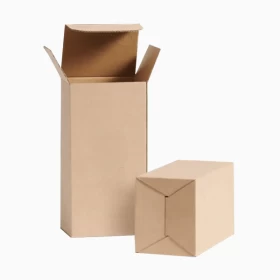
Kraft paper, or kraft, is a paper or cardboard that is made from a chemical pulp produced during the kraft process. Nowadays, kraft paper is a preferred choice as an eco-friendly material and is mainly used in modern packaging. Available in an extensive range of colors, shades, or styles, ideal for creating rigid boxes, sturdy cartons, and durable wrapping kraft paper.
The kraft is a German word that means strength or power. So it`s not just the name, as kraft paper is actually a strong paper compared to other traditional or normal paper. The color of raw kraft is brown, and also durable and tear-resistant. The surface of the kraft paper is porous and textured, which provides ease for the supreme-quality printing and finishing that combine to give a premium rustic appearance.
Due to its strength and versatile nature, it is a first choice for those brands that are looking for branded packaging solutions with integrated durability and sustainability.
Due to a rapid increase in demand for sustainable packaging and the expansion of food, e-commerce, and other related industries,it is estimated that the global kraft paper market is set to reach USD 18.7 billion by 2025 with a compound annual growth rate (CAGR) of approximately 3.0% to 4.2% during the forecast period.
Kraft paper is widely used in the packaging industry for making packaging boxes, mailers, wrapping sheets, and paper bags, etc.
What are the Main Characteristics of Kraft Paper?
The key characteristics of kraft paper include:
- Thick paper (High-tensile strength)
- Surface can be flat or round
- Environmental friendly
- Weight ranges from (20 to 120 gr) depending on intended use
- Natural brown color, but it can be turned into white due to bleaching
- Organic and rustic look
What are the Main Types of Kraft Paper?
The following are the main types of kraft paper:
Coated Unbleached Kraft (CUK)
Coated unbleached kraft paper is a strong and durable paperboard and considered a highly basic material for packaging. It is made from a combination of virgin and recycled wood fibers ( 80% virgin fiber wood pulp/cellulose kraft pulp). This does not involve any kind of bleaching, and there is also no addition of any chemicals. This is why it is also named the Solid Unbleached Sulfate (SUS).
Among all kraft paper-based packaging substrates, coated unblocked kraft is the thinnest. Its smooth surface and ease in printing are due to the coating of naturally occurring kaolin clay-titanium dioxide.
Solid bleached kraft paper (SBS)
Solid bleached kraft paper is also known as solid bleached sulfate board. It is a supreme quality paperboard that is made from 100% bleached virgin wood pulp. Although solid bleached kraft paper is considered less eco-friendly than unbleached kraft paper, but is majorly preferred for the packaging of luxury products due to the following reasons:
- Smoothness in the surface
- Increased brightness
- Enhanced printability
All these factors help in giving the product a luxury or premium look.
Coated Recycled Board (CRB)
Coated recycled board is a 100% recycled kraft paper and the best sustainable option. Moreover, CRB is not made from virgin fiber and is a low-cost packaging substrate, ideal for food boxes, such as cereal boxes and retail boxes for multiple products. Due to surface smoothness, it has better printing applications.
What is the Production Process of Kraft Paper?
The Kraft process is the main process that involves the production of kraft paper products. The name ‘’kraft paper’’ originally came from the kraft pulping process, which was pioneered in the 1880s by Carl F. Dahl of Germany. This involves the conversion of wood into wood pulp with the help of some chemicals.
The Kraft paper production process involves the following steps:
Preparation of Raw Material
The main structural components which are present in the wood are cellulose and lignin. Lignin affects the quality of paper; therefore, it is removed from the cellulose.
Wood logs are first debarked, and then they are cut into small chips.
Pulping
Wood chips then undergo cooking under high pressure in a white liquor, a chemical solution that is formed from sodium hydroxide and sodium sulfide. This is done in a digester that results in the separation of wood fibers from lignin and forming a black liquor and a brown pulp.
Bleaching
To obtain a light paper, the brown pulp is completely washed, and with the help of the bleaching process, the remaining residues of lignin are also removed. This ultimately results in the desired lightweight and bright paper.
Stock preparation
Water is then mixed with bleached pulp to make a thin slurry. The slurry of pulp is then used to make a continuous sheet of paper.
Pressing & drying
Excess water is then removed from the paper sheet by squeezing to increase its density, and then left for drying.
Finishing
The developed final paper is then coated to enhance its surface properties, such as a glossy nature and smoothness etc.

Kraft Paper VS Regular Paper
There are some major differences between the kraft paper and regular paper, which are as follows:

What are the Major Benefits of Kraft paper?
There is a range of benefits of kraft paper in the packaging industry, which are as follows:
Eco-friendly: Kraft paper is eco-friendly, recyclable, biodegradable, and compostable, and is considered the best choice for packaging. Moreover, it also plays a major role in disposing of the landfill waste. Its natural decomposition process is as simple as leaves falling from a tree.
Durability: It is highly strong and durable, and provides tear-resistance as compared to regular paper. The strength lies in fiber composition. Lignin is reduced, and sulfur content is higher in kraft. This is why Kraft paper is preferred in terms of protecting products during handling and shipment. Moreover, mainly used in those cases where high-strength paper is used, e.g, grocery bags.
Recyclable: As kraft paper is recyclable so it can be reprocessed into multiple tubes to be used in new packaging.
Made from a Renewable source: Kraft paper is made from wood pulp, which is a renewable source. Due to the FSC-certified forest, it also supports sustainability in forestry.
Customizable: It is available in many different customization options, which include coated, bleached, uncoated, and recycled. In addition, kraft paper can be easily embossed, printed, and foil-stamped with your brand’s colors and logo.
Versatile nature: Kraft paper can cater to the needs of every industry, such as cosmetics, food, e-commerce, or any retail business. Moreover, it comes in both brown and green stem colors, depending on the bleaching process, and both have varied practical applications.
Diversity in terms of style: There are also different types of kraft paper, which include mailers, rigid boxes, and pouches.
Moisture and heat resistant: Due to higher density and strength, it also offers protection of products against heat and moisture during the shipping process. Due to the coating and lamination of kraft paper, it is also preferred for protection from water, dust, oil, and grease.
Cost-effective: The manufacturing cost of kraft paper is also lower as the production of brown paper is made from different types of low-cost types of wood, such as pine and bamboo.
Lower shipping cost: Kraft paper is light in weight and therefore offers a lower shipping cost.
A premium brand look: Kraft paper works best for digital-offset printing and with eco-friendly inks, so it gives a sharper, as well as consistent look of your brand via a catchy and professional design. Its natural brown texture also has an additional premium look or natural aesthetic appeal that captivates the customers and gives a boost to the business.
Boost sales of products: As Kraft is eco-friendly and uses FSC-certified recycled packaging, it also helps in raising the sales of products, as the attention of consumers is now more shifting towards protecting the environment.

What are the Customization Options Available for Kraft Paper?
The customization options for kraft paper are unlimited. With your desired customization, you can get a customized packaging that not only elevates the value of your product but also makes your brand stand out from the competitors.
All the top packaging companies have customization options that help the brands to promote their products with eye-catching packaging of their product.
Printing options:
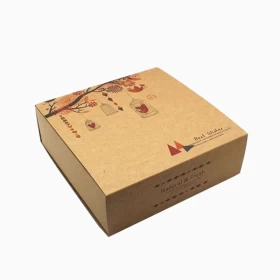
You can get tailored packaging by adding a logo, tagline, or any aesthetic or stunning artwork to make the product appealing. In addition, you can also have your own desired colors and patterns to get a new and trendy look for your product.
Foil stamping:
This helps in creating a shiny, luxurious look for the products.
Moreover, they also have several finishing options, which include:
Matte: It gives a simple, natural look.
Glossy nature: As compared to matte, glossy finishing gives a shiny, bright appearance that captivates the customer.
With the help of all above mentioned customization options, you can give every customer an unforgettable unboxing experience that makes your product their first choice. Moreover, it also results in increased customer loyalty and brand awareness.
With the use of stunning and professional finishing touches, you can give your product a highly premium look.
Other structural and functional options include:
- Die-cutting
- Coatings
- Wax coating
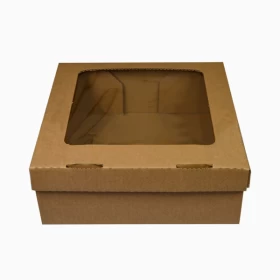
- Window cut-outs
What is the Environmental Impact of Kraft Paper?
The environmental impact of kraft paper is significantly positive than that of other packaging materials. Several packaging materials are available in the packaging industry, but among all, kraft is more eco-friendly due to the following factors:
Recyclability: Kraft paper is 100% recyclable, so it can be recycled and reprocessed numerous times and does not require new materials.
Biodegradability: The decomposition period of kraft paper is natural as well as rapid, as compared to plastic, whose complete degradation process takes up to hundreds of years. This is why Kraft shows a reduced environmental impact than plastic, Styrofoam, or other packaging materials.
Decreased carbon footprint: As it is recyclable and lightweight, it contributes to lower consumption of energy during manufacturing and shipping.
Sustainability: Kraft is made from wood pulp, which is actually a renewable source. This thing makes the Kraft paper a more sustainable packaging material.
The Kraft process is also sustainable as it approximately involves the use of 95% raw materials, and the release of chemicals during the production process is also lower compared to other paper packaging methods. However, if the process and the released chemicals are not effectively managed, then they can exert a negative influence on the environment.

What are the Applications of Kraft Paper in Packaging?
Kraft paper is used in multiple innovative packaging options in the packaging industry with several practical applications.
The use of kraft paper across several industries is exceptional, and it has the following major applications:
Corrugated boxes: Kraft paper is mainly used to make corrugated boxes in the e-commerce industry. They help in making the products secure during harsh shipping conditions.
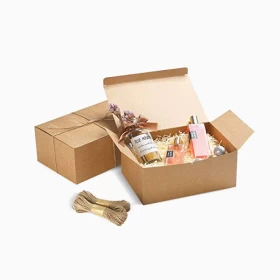
Carton boxes: Kraft paper is also used to make carton boxes in different industries such as retail, food and beverage, electronics, cosmetics, and e-commerce. Those industries whose main goal is to ensure sustainability and take eco-friendly initiatives prefer the brown kraft paper carton boxes due to their raw and rustic look.
Protective wrapping: Kraft paper is also used to wrap fragile or delicate items to protect them from any kind of damage during transit or shipping.
Kraft paper bags: Kraft paper bags are also used for different types of products, which include coffee, baked goods, apparel, etc.
Heavy-duty packaging: Due to its high tensile strength, kraft paper is used for packaging heavy industrial materials and furniture to withstand the harsh shipping conditions.
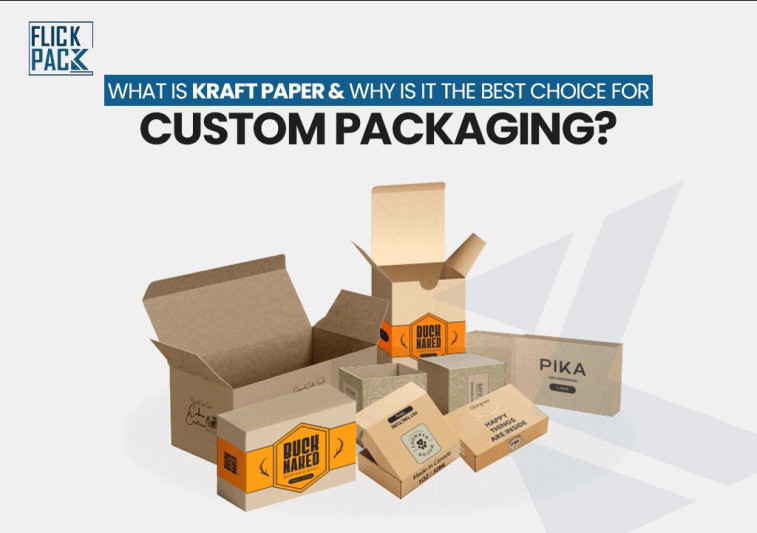
Branded packaging: The rusty natural look of kraft paper makes it a popular choice for brands that demand sustainable branded packaging.
Final thoughts
Kraft paper is a popular, eco-friendly, and sustainable packaging material that is used in the packaging industry throughout the world. Its versatility, strength, style, along with customization and eco-friendly packaging, make it prominent among those brands or businesses that always prioritize the quality of packaging without harming the environment. Choosing the right packaging material and a supplier can alter the entire scenario and help the brand reach the apex of success in a competitive market.
Elevate your Brand with Flick Pack’s Custom Kraft Packaging
Flick Pack is a trusted custom packaging company in the USA. At Flick Pack, we have a skilled team of packaging specialists and designers who are committed to delivering the highest quality custom packaging that caters to the individual requirements of each product in any industry.
We ensure that all our custom kraft packaging solutions are perfectly aligned with the demands or requirements of each industry.
Here, at Flic Pack, you can find the highest-quality kraft packaging with many amazing features:
- Eco-friendly materials
- Sustainability
- Durability
- Customization
- Advanced printing options
- Affordable rates for bulk orders
- Fastest turnaround
- Free design support
By choosing the Flick Pack, you are selecting a kraft paper that not only protects your product but also gives you a unified branding experience with integrated sustainability.
With our custom packaging solutions, you can create packaging that definitely makes your brand stand out. Whether you need custom kraft boxes, printed packaging, or retail packaging, we are here to cater to all your needs.
So what are you waiting for? Reach out to Flic Pack, explore our diverse range of custom packaging boxes, and start your transformative packaging journey today.
Ready to Create Custom Kraft Packaging that Makes a Difference?
Frequently Asked Questions
Where is Kraft paper used?
Kraft paper is used for packaging different products of varied industries, such as bags, cartons, gift wrapping, and different crafts etc. Moreover, it also has other major applications, including protection and shipping.
What is the difference between a normal paper and kraft paper?
Kraft paper is more durable and tensile than normal paper. In addition, kraft paper is more porous and textured.
What are the major disadvantages of using kraft paper?
One of the main disadvantages of kraft paper is that it offers poor resistance to water and moisture.
Is Kraft paper eco-friendly in nature?
Absolutely yes, kraft paper is eco-friendly, biodegradable, and recyclable.
Is there any similarity between Kraft paper and cardboard?
Yes, both kraft paper and cardboard are similar in their strength and are made from wood pulp.
Can Kraft paper be used for food products?
Kraft, kraft paper can be used for packaging food products.
Is Kraft`s Kraft paper waterproof?
No, standard kraft paper is not waterproof.
Is Kraft paper recyclable?
Yes, Kraft paper is recyclable.
What is Kraft paper in construction?
Kraft paper is used in construction as it provides surface protection and other related applications.
Is brown packing paper recyclable?
Yes, uncoated as well as clean brown packaging paper is recyclable.