Spread the Love
Last updated on June 09, 2026How to Design Soap Packaging That Dominates Retail Shelves?
Imagine that a customer enters a store, whether it`s a boutique or the personal care section of a large chain. There are hundreds of products surrounding them, all claiming to soften skin, contain clean ingredients, and make for a better morning routine. They stop. They go and grab a bar of soap, bring it to their nose, and breathe deeply.
If they do that, you’ve already won half the battle. But how did you get them to pick up your product out of the hundreds sitting right next to it?
The truth of the skincare and bath industry is that you might have the best cold-process soap in the world that is the very best for your skin. You may be using wild-harvested shea butter and the most precious essential oils. However, all that`s moot if the purchaser simply passes right by. Your customer will see your box before they see your product.
The box does all the heavy lifting. It works very similar to silent salesperson, telling your brand`s story, worth, and quality in about three seconds. If you are launching a new line or overhauling a tired brand, knowing exactly how to design Soap packaging is just as important as the recipe you use to make the soap itself.
So let`s get into the how-to of designing packaging that looks great, withstands the hardships of shipping, and gets your product into your customers hands.
The Hidden Jobs of Your Packaging

Many people consider packaging to be a pretty wrapping. If you consult any manufacturer or retailer, you`ll get a different answer. Before a box attempts to look good, it`s got a lot of jobs to perform.
If your packaging doesn`t perform these basic functions, then you`re going to have to deal with returns, damaged products, and cranky wholesale buyers.
-
Trapping the Scent: Why do customers purchase artisan soaps? Because of their amazing aroma. However, scents, particularly natural citrus or mint essential oils, are very volatile. They evaporate quickly. You don`t want that soap to sit around for a month in a hot warehouse and a month in a store, and arrive smelling like nothing special when the customer gets it. Your box should be able to act as a barrier to prevent those aromatic compounds from escaping through the paperboard.
-
Taking the Hits: Soap isn`t exactly fragile glass, but it isn`t indestructible either. Soft, cold-process bars can easily dent. Humidity can cause the glycerin to sweat, making the bar look messy. Your packaging has to absorb the shock of being tossed into delivery trucks, dropped by stock boys, and knocked off shelves.
-
Following the Rules: The FDA and the FTC don`t care how pretty your box is; they care about the law. Your design needs dedicated, readable space for strict compliance information. We`re talking about exact INCI ingredient lists, net weight measurements in both ounces and grams, and your company`s physical address. If you hide these or print them too small, you risk getting pulled from shelves.
-
Keeping Things Clean: Nobody wants to buy a bar of soap that looks like a dozen other people have rubbed their thumbs on it. Your packaging has to give the buyer confidence that the product inside is pristine and completely sanitary.
Choosing Your Canvas: The Materials
You can`t start playing around with fonts or color schemes until you decide on a physical material. The kind of material you choose will determine the feel of your brand in the hand, cost of production, and printing techniques you can achieve.
Cardboard: The Heavyweight Champion
Go anywhere, even on any aisle, and you will find that cardboard boxes for soap packaging are the most prominent boxes. There`s a very good reason for this. The surface of cardboard, whether SBS (Solid Bleached Sulfate) board or kraft board, is printable, won`t break the bank, and incredibly sturdy.
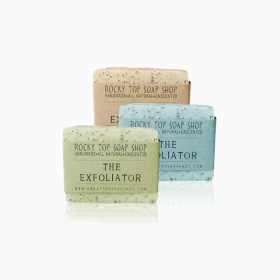
For a clean, modern and high-end appearance, SBS board is your best friend. It`s a pure white stock which excels in bright colors and refined high resolution graphics. Conversely, if the brand is all about rustic, organic, back-to-natural, then the kraft board in its natural state is the one that will really send the message to the buyer. Not to mention that cardboard neatly stacks in shipping containers and is flat enough to fit on a store display.
Showing It Off: Clear Options
There are times when putting your product in a solid paper box is akin to a crime. But if you roll hours and hours of activated charcoal into white clay or make dried lavender "blooms" as the top layer of your bars, you want people to see that.
This is where transparent soap packaging comes in. Usually made from clear PET plastic, these boxes put the actual product front and center. The soap becomes its own marketing graphic. Shoppers love this because there is zero mystery; they know exactly what they are spending their money on. The catch? Your quality control on the production floor has to be flawless. A scratched or poorly cut bar of soap can`t hide in a clear box.
The Sweet Spot: Window Designs
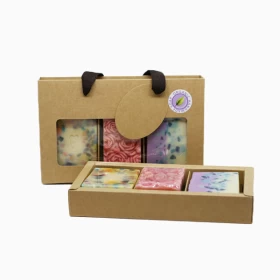
What if you want the sturdy feel and printing space of cardboard, but you still want to show off the visual texture of the soap? You use soap boxes with window cutouts.
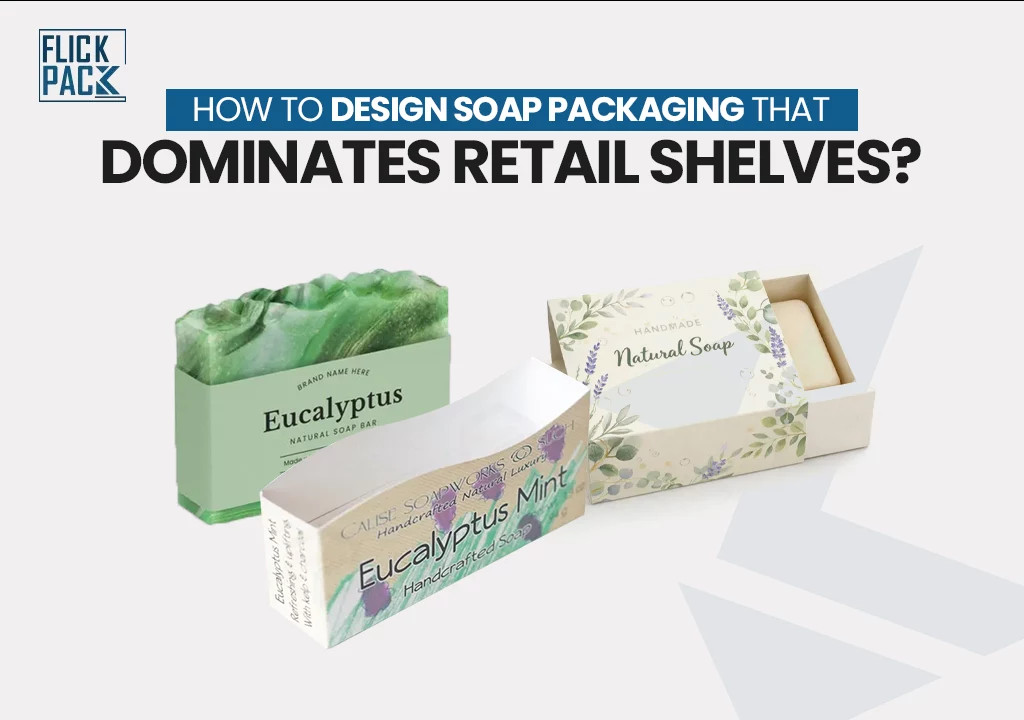
This is probably the best of the design styles in retail right now. You`ll receive hard cardboard, enough space to brand it and list your ingredients, plus a strategically cut hole on the front for kids to put their fingers through. In some instances, brands will leave the hole completely open so that consumers can feel or smell the soap. Sometimes, they use a translucent film to cover the hole to preserve the beauty of the soap and, of course, keep dust out. The best of both worlds.
Building the Blueprint: The Design Process

Alright, you know what the box needs to do, and you`ve picked your material. Now comes the actual design phase. If you are sitting down with a blank screen and looking for fresh soap packaging ideas, you need a system. Don`t just start throwing colors around. Follow these steps.
Step 1: Figure Out Exactly Who Is Buying
A box marketed towards 20-somethings searching for vegan, animal-free skincare will look significantly different from a box geared towards the mechanic who needs a strong pumice to scrub grease from her hands. Who is your customer? Are they buying this as a luxury gift? Are they buying it as an everyday family staple? Your customer dictates whether your design should be loud and aggressive, soft and minimalist, or sleek and expensive.
Step 2: Fix Your Information Hierarchy
Shoppers have no attention span. None. If they can`t figure out what your product is in three seconds, they move on. You have to rank the text on your box by importance.
-
The Main Event: Your brand name and the scent. (e.g., "Oatmeal & Honey"). This needs to be the largest, most readable thing on the front panel.
-
The Hook: What makes it special? Pick one or two words. "Exfoliating." "Deep Moisture." "100% Vegan." Put this right under the scent.
-
The Fine Print: Everything else—the company story, the exact weight, the ingredient list, the barcode—goes on the back or the sides. Keep the front clean.
Step 3: Stop Ignoring the Sides
Most amateur designers cram everything onto the front and back of the box and leave the side panels blank. That is wasted real estate. Use the sides of the box to tell your story. Why did you start making soap? Where do you source your ingredients? People love buying from real people, not faceless corporations. A quick, two-sentence story on the side panel builds massive brand loyalty.
Step 4: Play with Texture
Flat printing is fine, but if you want to look premium, you have to engage the sense of touch. Add a raised emboss to your logo so shoppers can feel it when they run their thumb over the box. Use a gold or copper foil stamp on the borders to catch the awful fluorescent lighting in retail stores and bounce it right into the shopper`s eye. Use a soft-touch matte coating that makes the cardboard feel like velvet. These tiny tactile details make a $6 bar of soap feel like a $15 bar of soap.
What Buyers Actually Care About Right Now
The market isn`t static. What worked in 2018 isn`t necessarily going to work today. If you want to grab market share, you have to lean into the current consumer mindset.
The Massive Shift to Green Packaging
You can`t talk about the personal care industry today without talking about waste. Consumers are hyper-aware of single-use plastics, and they will actively leave a product on the shelf if it looks like it’s going to sit in a landfill for 400 years. Incorporating eco-friendly soap packaging ideas isn`t just a trendy PR move anymore; it is a strict requirement for doing business.
How do you actually do it?
-
Use PCR: Ask your manufacturer for a Post-Consumer Recycled board. It means the paper has already lived a life as a cereal box or a shipping carton before becoming your soap box.
-
Ditch the Shrink Wrap: A lot of brands wrap their soap in plastic, then put it in a box. Stop doing that. Let the box do the work.
-
Vegetable Inks: Standard printing inks are full of petroleum products that make paper hard to recycle. Switch to soy-based or algae-based inks. They print just as brightly, but they break down safely on the earth.
-
Go Minimal: The most sustainable design is to keep the amount of items to a minimum. Consider small, compact wraps or simple cigar-band style sleeves. It reduces the use of paper by a fraction of its amount and you notify the buyer that you care about the environment and will do your part to keep it that way.
Big Fonts, Empty Space
Another massive trend is the death of clutter. A few years ago, brands were covering every inch of their packaging with busy floral patterns and complicated illustrations. Today, the shelves are dominated by empty, negative space and massive, bold typography. Letting the name of the scent take up half the box, surrounded by clean, empty white space, creates a feeling of confidence. It tells the buyer, "Our product is so good, we don`t need cheap parlor tricks to sell it."
Stepping Up to the Big Leagues

When you first start out, you might be printing labels at home or buying generic, blank boxes and slapping a sticker on them. That works for local craft fairs. But the minute you want to get into real boutiques or major grocery chains, that DIY look becomes a massive liability. Buyers for retail stores want brands that look professional, consistent, and ready for scale.
This is why upgrading to custom packaging is the defining moment for a growing brand.
Custom packaging means the manufacturer cuts the paper specifically to fit the exact millimeter dimensions of your specific soap bar. The soap doesn`t rattle around. The corners are crisp. The color of your logo on batch number 1,000 matches the color exactly on batch number 10,000. It shows retail buyers that you have your operations locked down.
Now, I know what you are thinking: Custom printing sounds incredibly expensive. And if you do it wrong, it is.
The secret to scaling up without destroying your profit margins is volume and vendor relationships. Once you know your design works, you have to stop buying short-run digital prints and start ordering soap packaging boxes wholesale. When you transition to a dedicated B2B packaging manufacturer and order 5,000 or 10,000 boxes at a time, your cost per unit plummets.
However, it`s not enough for a good wholesale partner to simply operate the printing press. A real packaging engineer will consider your design and assist you in "value engineering" it. They may say that if you trim the box by only two millimeters, you can get a whole row of boxes on the master printing sheet and save 15% of your costs. They may recommend an alternative folding system that could save your warehouse staff 10 seconds per box (hundreds of hours over a year).
Bringing It All Together
At the end of the day, your soap and your box are not two separate things. To the consumer, they are a single, unified experience. You can pour your heart and soul into formulating the perfect bar of soap, but if you don`t put the same level of obsession into the outer shell, you are leaving money on the table.
The first step is to know what it`s going to take to keep your box alive along the supply chain. Choose a material that resonates with the personality of your brand, whether it`s kraft paper or a clever window cut-out. Eliminate logos, lines, shapes, and backgrounds, just keep it to what your special customer cares about, especially sustainable and green materials. After mastering the design, work with a wholesale manufacturer to ensure you can obtain a reduced unit cost and guarantee your quality.
Do that, and your soap won`t just sit there gathering dust. It will jump off the shelf.