Spread the Love
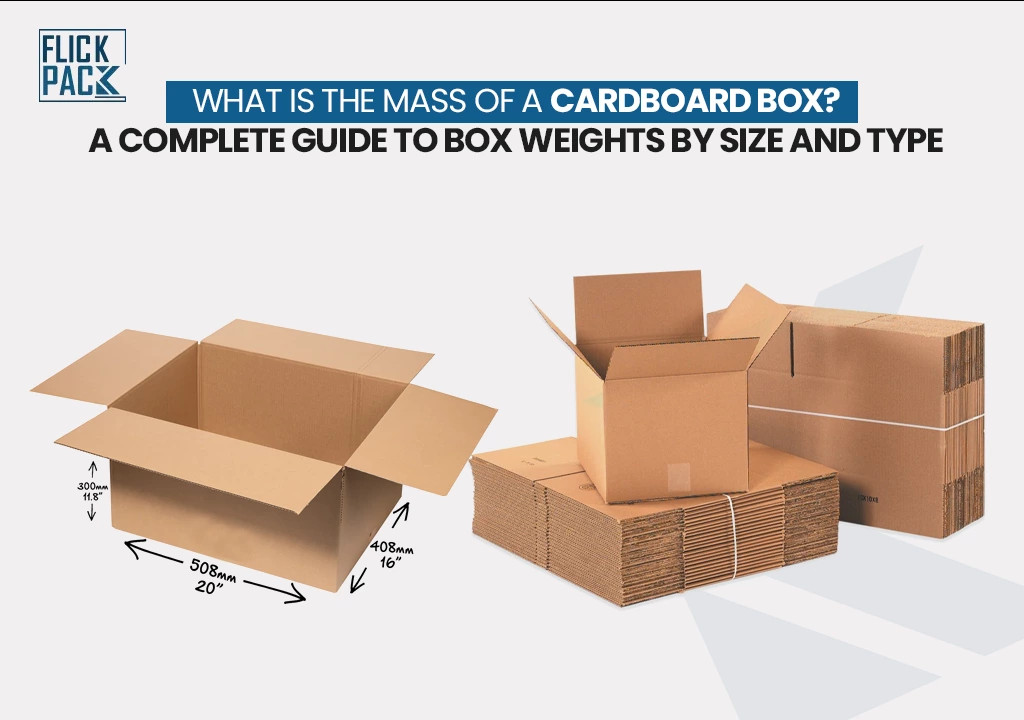
Last updated on July 24, 2026What is the mass of a cardboard box? A Complete Guide to Box Weights by Size and Type
Optimizing modern supply chain logistics would not be complete without a few steps. One of the first steps in optimizing modern supply chain logistics is figuring out the exact weight of an empty shipping container. The tare weight of an empty cardboard container referred to the industry as a container`s weight. It is an important factor to consider in a high-volume distribution network. This directly affects freight costs and warehouse structural safety. A box that is too heavy quietly takes money from the profit margin as carrier fuel surcharges increase. While on the other hand a box that is too light can buckle and crush merchandise that leads to costly consumer returns.
The guide will delve into the structural engineering aspects of packaging weight and its detail exact component factors. You will get to introduce successful optimization strategies to help procurement teams optimize packaging while minimizing bottom-line costs.
Information on the weight of a cardboard box

This section introduces the basic idea of container mass and describes the method used by engineers to baseline the empty packaging material. With knowledge of the physical make-up of a container, logistics teams can distinguish between pure spatial space and dead space, and set a standard of clarity when communicating with structural packaging suppliers.
What is the weight of a cardboard box?
The Cardboard boxes weight only applies to the unladen tare weight in the packaging and logistics sectors. This is the weight of a completely produced, empty, cardboard container, without products, protective void-fill, tape, or label materials.
The difference between the weight of an empty box and a loaded box
One frequently made mistake in packaging procurement is to confuse volumetric space with the mass of packaging. Cardboard box dimensions will determine the spatial volume, or physical envelope that a box can contain, in terms of length, width, and height. Packaging material weight is the combined weight of the paper fibers, structural interior waves, and adhesives used to make the box walls. The box`s external size and shape can be identical, but the box that feels heavy could be lighter outside due to the thickness of the fiberboard walls and the engineering of the box.
A box`s weight depends on the moisture content in the air, as cellulose wood fibres absorb moisture from the air. Structural packaging engineers are required to test the formal corrugated box weight, using conditions of exactly 23°C and 50 percent relative humidity, to meet worldwide TAPPI T-402 standards, and conduct tests in controlled laboratory conditions.
How Knowing box weights plays an important part in the learning process
When it comes to shipping a few dozen boxes of mail a month, a variance of 50 grams per box isn`t a lot. For a mid-to-large-scale business with 500,000 shipments per year, however, that little margin can make an appreciable difference in their operation.
Shipping Cost Calculations: If there is a 50-gram weight per package and 500,000 packages are shipped through your supply chain, that means 25,000 kg of dead weight moving through your supply chain. It directly increases carrier fuel surcharges and base rates.
Warehouse Stack Planning: In high-density warehouses, the strength of the compression of the empty box from top to bottom may not be adequate to support a vertical load. This can lead to buckled pallet stacks.
Product Protection: The container walls are designed to have the appropriate puncture and burst strength to protect the product from impact forces during transport.
Sustainable Engineering: A lighter box means less raw fiber use and fewer material scraps in production. It can reduce carbon emissions associated with shipping along distribution networks.
What is the mean weight of a cardboard box, approximately?

This section subdivides the standard weight measurement found in typical packaging applications around the world in commerce. Although weights vary by custom manufacturing lines, it is beneficial to set up baseline weights with acceptable weight windows to assist shipping managers in creating predictable outbound distribution models.
The mean weight of small cardboard boxes
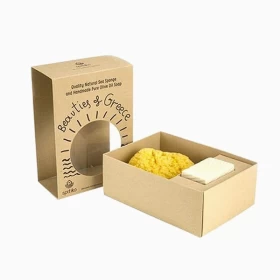
Cardboard Soap Boxes are used for direct-to-consumer distribution, small electronics, and cosmetics applications. The box size of a standard small shipping carton or subscription mailer is usually 6x6x2 inches to 10x6x4 inches. The average empty tare weight of these types of containers is usually between 38 and 95 grams, either with an ultra-thin single-wall design or a more traditional corrugated design.
The average weight of medium cardboard boxes
The medium-sized cardboard box is a standard for most e-commerce shipments, clothes distribution, and family home relocation. They are normally 12 x 12 x 10 inches to 16 x 16 x 12 inches. The medium single-wall (standard commercial paper grade) container is unfilled and has a mean weight of 220 to 380 grams.
The average weight of large cardboard boxes
Heavy-duty consumer goods, Bulk Retail Distribution, and Appliance transit are the design applications for large cardboard boxes. Common sizes range from 18"x18"x16" up to the large master cargo containers. These boxes are often made with tight, double-wall corrugated material and can have an empty tare weight of between 610g and 1,580g or more, depending on the weight capacity required.
Factors That Affect Cardboard Box Weight
This section will discuss the Materials and physical geometry used to determine the total container density. Standard shipping box is a specially engineered composite made from various combinations of paper types and arches inside the box. Any single variable can be changed to allow the box to weigh different amounts while maintaining the same overall outside size.
The dimensions of the box and its total size
The main component of basic box weight is the overall surface area of the flat fiberboard sheet pattern. The mathematical surface area grows with the length and height dimensions. This is why the amount of raw paper material needed and the weight of the empty box itself.
Cardboard Thickness and Board Grade
The structure of container walls determines wall density and overall weight of the container.
Single-Wall Cardboard: It has one medium fluted inside and two flat outer liner sheets glued together. This is the all-purpose option for shipping items that are light and give good support at a lightweight tare weight.
Double-Wall Cardboard: Made of two wavy fluting mediums that are separated by three flat liner sheets. The style provides a dramatically higher top-to-bottom stacking strength and puncture resistance, with the physical weight about 40 to 60 per cent higher than single-wall sheets.
Triple-Wall Cardboard: Cardboard with three layers of fluting and four liner sheets. This heavy industrial specification is designed to be used for heavy machinery parts in place of wooden crates and will have a very high empty tare weight.
Type of Corrugated Flute

The interior wavy pattern of Corrugated board can be classified into the following types of flutes. These arches will vary in height and in proximity to each other. This will give different thickness to the board and the paper needed for making the waves.
A Flute : It has 30 to 36 flutes per linear foot and represents the heaviest product. This can be laid over or under the material used in the industrial product.
B Flute : High puncture resistance, have flat surface for high-quality printing, and 44-50 flutes per linear foot.
C Flute (~4.0 mm thickness): Used as the standard, all-purpose flute for standard shipping boxes, it is the flute with 39 to 45 flutes per linear foot.
E Flute (~1.6mm thickness): The 90 to 94 flutes per linear foot profile is ultra-light and ultra-thin, often used as a cosmetic and subscription box flute.
F Flute (0.8 mm thickness): A micro-flute profile, characterized by the very tight and very shallow flutes, results in a lightweight retail container with excellent foldability.
Materials for paper making and the nature of paper
Paperboard is sold worldwide by weight, measured in GSM Grams per Square Meter, which is the mass of a flat sheet of paperboard one square meter in area. High-GSM sheets are thicker, denser and heavier physically.
Directive Fiber: It is extracted directly from raw wood pulp, where the long fiber can be used for high tensile strength. The engineers can use lower GSM sheets and maintain the structural strength.
Recycled Fiber: These are created from broken-down material post-consumer waste and are shorter fibers, which need thicker, higher GSM applications to compare to virgin fiber.
Premium unbleached kraft paper liners: It offers the best protection at the lightest weight, and testliners can be recycled kraft paper that can offer more physical weight to the container.
Additional Packaging Features
If custom manufacturing is included in a box configuration, then it can be included in the base empty weight of the box, as calculated by the flat board.
Inserts and Dividers: These are internal corrugated partitions and/or protective foam that will increase the mass of the empty packaging by 15 per cent to 40 per cent.
Coatings: A variety of specialized aqueous coatings or moisture-resistant wax alternatives can add measurable mass to high volume shipments.
The mass of the cardboard boxes according to the different types of boxes

The effects of the various standard business boxes on the distribution of physical material are the subject of this section. Layouts differ in cutting and folding for various box designs in the manufacturing process. The right style of your fulfillment track will enable you to deal with baseline tare weight for various distribution channels.
Regular Slotted Containers (RSC):
The Regular Slotted Container is the most standard size box in the world. All flaps are parallel in length from edge to middle; flaps are joined to each other in the middle for regular taping. The RSC is extremely efficient, light, and won`t leave any structural scrap, since it is not made with overlapping panels.
Die-Cut Boxes
Die-cut boxes are boxes that are specially made with the use of a manufacturing die press. They can be elaborate and include multiple walled side panels, side panels of typical mailing boxes, and self-locking tabs, and often include elaborate folding panels. These Custom Pyramid Boxes, of course, will be heavier than an RSC box with the same inside dimensions due to the overlapping layers of paperboards.
Folding Cartons
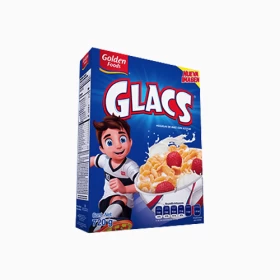
A carton that is not designed with corrugated flutes in the middle is called a Cardboard Cereal Boxes. Usually used for aesthetic reasons and not for traveling protection, these boxes are very lightweight, easy to fold, and are most commonly found in the primary retail shelves, such as cereal boxes, pharmaceutical packaging, shoe containers, and more.
Heavy-Duty Corrugated Boxes
Heavy-duty boxes are meant to carry industrial parts, chemicals for storage and exporting, and come with double or triple-walled corrugated boxes. They are intended for high stacking loads and for puncture risks and are heavy empty containers, handled and/or positioned using mechanized devices.
Moving Boxes
Moving boxes come in a variety of sizes, single-wall or light double-wall Custom Cardboard Gable Boxes, which are specifically made for moving in a house or business. They want more consistency in uniform, stackable dimensions than in more sophisticated material properties, like virgin Kraft lining, and are not concerned with the performance of the material when handled manually.
Reduce Packaging Costs by Designing to Minimize Shipping Costs

Shrinking your packaging can help reduce shipping costs. Switching to high-density virgin kraftliners is possible with the help of a structural packaging expert. These thin papers are used with no loss of product protection, and they decrease the overall weight of the box. Footprinting around the product size to customize the box will not result in any lost space. This design is such that it not only alters the physical tare weight but also alters the volume size as well.
Box weight and sustainability
Lightweight engineering design reduces your company`s environmental waste and saves your operating costs. Using less paper fiber drives down initial manufacturing costs. This material optimization provides immediate green milestones and shipping savings.
Lightweight Packaging Benefits
Industrial lightweighting involves minimizing the weight of materials, while maintaining product safety. Unnecessary paperboard weight has a tremendous environmental and economic benefit.
Reduce Outbound Container Weight: Lighter boxes reduce fuel usage throughout your distribution network.
Lower Raw Wood Usage: Source less wood fibres, which reduces sourcing costs and reduces chemical mill waste.
Stacking Strength and Mass Balance
To achieve a successful, sustainable optimization, a compromise between structural performance and the weight of the materials needs to be found. If you remove too much cardboard weight, your boxes will fall apart while in transit. Damage costs mean a costly waste of products.
Weight Challenges Using Recycled Materials
Paperboards that are recycled take post-consumer waste out of area landfills. The higher the GSM, the thicker the paper, and the more vertical pressure it can withstand, for short recycled paper fibers. Manufacturers of paper packaging have to find a balance between light virgin Kraft sheets and recycled blends for green attributes.
Common Errors in Box Weight Estimation
Boxes that are over-engineered cost you money. If the boxes are not engineered properly, they become very hazardous for dense products. Going over this blind spot is the key to identifying missing savings windows for the companies.
Ignoring Board Grade: An error in freight forecasting can occur if a box of the same dimensions is assumed to have the same weight and materials do not have the same density.
Other Packaging Parts: The raw box design is the parameter that almost all procurement teams consider. They don`t realize that the weight of cell dividers, polybags, tape and packing slips all collectively add up to a lot in the finished package.
Actual Scale Weight vs Dimensional Weight: Actual scale weight is the weight of your empty box. One thing budget analysts tend to overlook is that if the box is oversized and carriers charge dimensional weight as well.
Universal Weights by Size: People assume that a standard box of a specific size must have a standard weight. Various paper grades and flute heights are used by various suppliers.
Here are a few tips for reducing the weight of your boxes:

These easy strategies can be used by purchasing agents to reduce the mass of their outbound containers right away. With paper liners or sizing configurations, the small changes pay off quickly without the need for risky change of strategy. Apply these techniques to make your design decisions more efficient and to reduce noise in your structure.
For E-Commerce Businesses
Brands need to pay significant attention to the low Tare weight and low volumetric dimensions. Change the traditional thick single-wall boxes to tight B-flute or E-flute die-cut mailers. It also ensures that you remain within the value of parcel shipping brackets.
Manufacturers and distributors
It is important for fulfillment managers to closely monitor the top-to-bottom compression strength metrics. Ask your board supplier for particular Edge Crush Test ratings. This step will provide you with light and high-performance virgin liners that will perform well in multi-tiers in your warehouses during extended periods of vertical pallet stacking.
For Moving and Storage Applications
Household goods that are light should be packed in standard and inexpensive C-flute containers for fulfillment teams. Heavy double-wall boxes are reserved for dense books, kitchen items and fragile electronics.
For International Shipping
Unbleached virgin Kraftliner boxes are recommended in the case of international shipping. This method helps materials to be safely stacked throughout the entire transit. These boxes will not be affected by high humidity at international ports.
Visit Or Website To Get More Detail Information
The appropriate management of container mass maintains low scale weight. An auditing system will allow you to monitor board grammage formulas and comprehend the rules of carrier pricing to reduce your business operating costs. Smart engineering design ensures an efficient and cost effective Flick Pack Packaging process in the global supply chain.
Frequently Asked Questions
What is the weight of an average box of cardboard?
The standard medium ecommerce shipping box is 12x12x10 inches and weighs around 220g to 255g. The exact weight will vary according to the density of paper that is selected by the manufacturer.
What is the mass of a moving empty box?
An empty standard medium moving box weighs about 280-340 grams. A large heavy-duty wardrobe box is 900-1400 grams empty.
Do the thickness of the cardboard and the weight go together?
The thickness of the cardboard will directly affect the thickness of the box. Thicker versions, such as A-flute or double-walled are more expensive to produce than slim micro-flutes such as E-flute because they use more raw paper pulp and adhesive per square foot.