Spread the Love
Last updated on June 18, 2026What is Custom Printing and Labeling? The Definitive Guide for Personal Care Brands
Walk down the personal care aisle of any major retailer, and count how long it takes you to judge a product on the shelf. This is a retail psychologist estimate: It takes 3 to 7 seconds to persuade a customer to choose your product rather than the one right next to it.
In those couple of seconds, the customer will not be able to smell your artisanal soap. They can`t feel your natural facial scrub. They cannot see the results of your anti-aging serum. The only thing they interact with is the box it sits in and the sticker wrapped around the bottle.
Until the moment the product is purchased and opened, the packaging is the product.
But before we get into that, let`s discuss a fundamental question that all growing retail brands have to address: What is custom printing and labeling, and, more importantly, what does it mean for your bottom line?
If packaging is simply a package-to-shelf process, then you`re missing out on some cash. Good packaging is all these things: your silent salesperson, a potential legal lifesaver to avoid fines, and a physical barrier against chemical changes.
The Factory Floor: Understanding the Mechanics

First, let`s take a brief look at how these materials can be made and then examine the retail strategy. New brand owners contact a packaging supplier and ask them, what does Custom Printed Boxes mean in their production process? Most commonly, the brand owner needs to understand the difference between a standard stock packaging and a complete bespoke packaging production run.
To define custom printing, one must first look at the process of transferring a brand`s unique artwork, brand logos, typography, Pantone colors, legal copy, and more—directly onto a raw packaging substrate
. You don`t just purchase a blank box and affix a sticker to it. You run flat sheets of material through huge, multi-million-dollar presses to produce something that is completely unique to your business.
This is accomplished by packaging manufacturers using various technologies, depending on the volume and cost of the packaging:
-
Offset Lithography: This is used for larger printing jobs. It is a process of transferring ink from metal plates to rubber rollers and then pressing the image onto a paperboard. There is no other printing method that has the same color accuracy as offset. Box number 10,000 can look exactly like box number one when you order it in the right color, and offset guarantees it will.
-
Digital Printing: In contrast to offset printing, there is no need for print plates with digital printing. Electronic files are sent directly from the computer to the printer. The price for a single box is marginally more expensive for large orders, but digital printing offers an incredible level of flexibility. It allows for small quantities, overnight changes, different prints for seasonal promotions, and no expensive setup charges.
-
Flexography: Flexo is generally used for high-volume label printing and corrugated shipping boxes. It employs flexible plates based on a photopolymer process mounted on rotating cylinders. It is very quick and transfers ink onto lots of porous and non-porous materials.
Many ask us, "What are custom printing applications compared to custom labeling, and why labeling is important?"
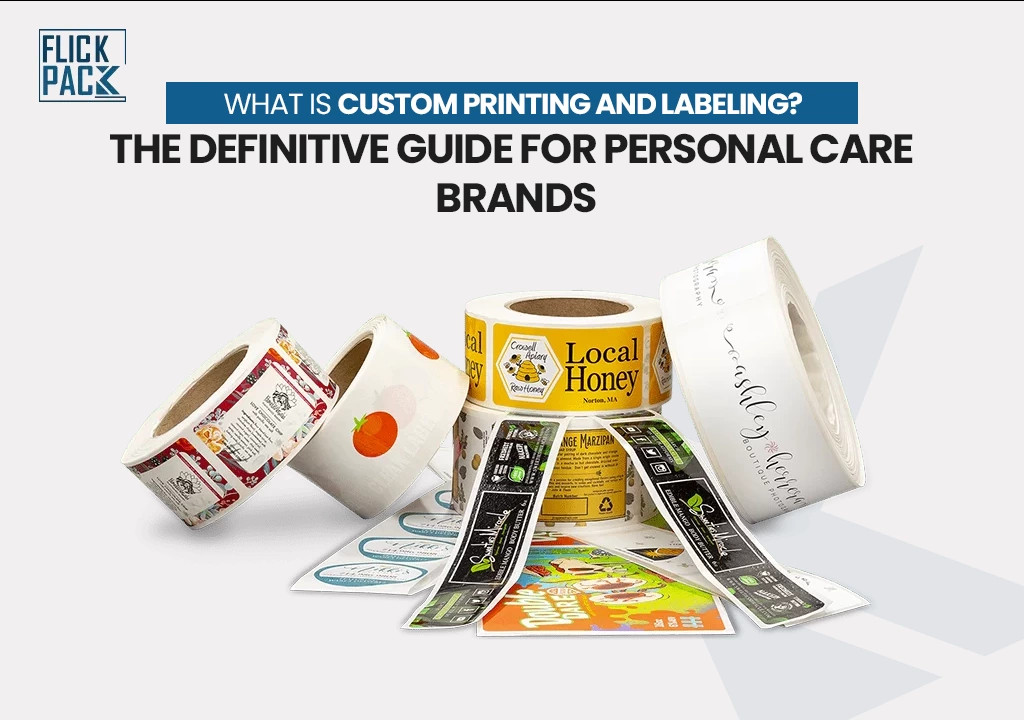
It`s an easy-to-understand distinction. Printing is adding ink directly to the main folding carton or rigid box. There are two steps to labeling. The initial step is to obtain a printed copy of your design on a material such as paper, vinyl or a special plastic film like BOPP (Biaxially Oriented Polypropylene). The second step uses a particular glue to affix the printed material to your main container (such as a glass dropper bottle or a plastic lotion bottle).
The Hidden Role of Packaging: Chemistry and Compliance

In the case of care products, packaging needs to be put to the test. A t-shirt can be sent through a standard poly mailer with no problems. A cold process soap bar or vitamin C serum is a whole different ball game. The products are sensitive to chemicals and the environment.
If someone asks what are benefits of labeling other than to make the bottle look good, direct them to the issue of product stability and legal compliance. Here`s just how strategic packaging decisions keep your product and your business safe:
Maintaining Aroma Stability The ability of the aroma to remain stable throughout the product life and to resist changes during storage is critical. Essential oils and synthetic fragrances are used in most high-quality personal care products. Essential oils are very volatile—they like to vaporize! A bath bomb or bar soap in a flimsy, porous container will release its fragrance when you take it on the road. When it finally arrives at the customer, it has the fragrance of plain wax. A barrier is formed by high-quality packaging materials and tight-fitting labels. They trap the volatile compounds within them, which means the product will have the desired aroma when it is put in the store.
Defending Against the Environment The bathroom is the most challenging area of any home for products. They experience high humidity conditions as well as temperature fluctuations on a daily basis. After 3 days, a cheap paper label on a shampoo bottle will start peeling off, disintegrating, and blocking the shower drain. This is where it is important to get the substrate and adhesive right. A waterproof BOPP label with an acrylic adhesive can withstand water pressure and will not be affected by water. When specific aqueous coatings or laminations are applied to the outer box, environmental moisture cannot warp the cardboard before the customer opens the box.
Dealing with the FDA`s Strict Regulations The personal care industry is well regulated. You don`t just throw all of the ingredients together that you would like to share. The INCI (International Nomenclature of Cosmetic Ingredients) list is required to be formatted in a very specific manner by the FDA. You also have to display the exact net weight, distributor information, and safety warnings. Keeping your company out of legal trouble is the top benefit when it comes to discussing the importance of labeling. All this legal copy should fit nicely into a well-designed label. It will help you stay fully compliant without making your product an ugly warning sign.
The Guarantee of Safety How will a customer know that the face cream they purchased has not been opened, tested, and then refilled by another person and placed on the shelf? They check for a tamper-evident seal. Oftentimes, custom labels serve as a security measure. Immediately, the consumer can see the product is still fresh and safe to apply to the skin because of a perforated shrink band or a branded sticker over the lid of the jar.
Choosing the Right Structure: Materials Matter

The physical material used will influence the whole user experience. It affects the feel of the product in hand, its weight during shipping, and the value to the consumer. The structures are entirely different for different products. Let`s take a look at the main materials for B2B packaging and when to apply them.
Cardboard: The Industry Standard Paperboard is the solution for most retail products. It is economical, can be shipped flat to save warehouse space, and has an absolutely smooth surface for high-resolution graphics. Custom cardboard boxes offer you complete control over the finish. A soft-touch lamination can be used to make the box velvety, spot UV coating can add a pattern on a matte background, or foil stamping can add a logo that will reflect the light. The medium that strikes a balance between quality and affordable products is cardboard, which is the choice of everyday moisturizers, regular bar soaps, and cosmetic plugs.
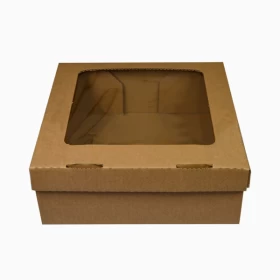
Kraft: Communicating Natural Ingredients People see and understand picture information instantly. When they encounter a bright neon color or shiny plastics, they think the item is made of synthetic chemicals. They believe that if they observe raw, earthy textures in the product, it must be a natural product. Custom kraft boxes are boxes that are made from unbleached wood pulp. Kraft packaging, when combined with a minimalist design in one color (typically black or deep green), can tell the consumer what to anticipate before even perusing the ingredients. It is also very recyclable, a feature that is attractive to green-minded purchasers.
Rigid Structures: The Luxury Experience Consider the last time you purchased a fancy cell phone or a costly bottle of perfume. The box wouldn`t fold down flat. It was dense and weighty. Custom rigid boxes are created from thick, high-density chipboard (up to 2-3mm thick). These boxes are more expensive than other packaging because they are not flat-packable, but they change the perception of the product inside. These boxes are rarely disposed of and will be stored by the customer to keep jewellery or keepsakes in for years to come, thus extending your brand`s lifespan in their home.
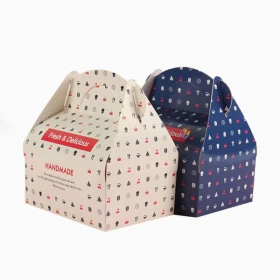
Gable Designs: Convenience and Display Sometimes, you must have a package that serves as a protective container but can also serve as a carrying case. Custom gable boxes are designed to have a pitched roof and fold into a built-in handle on top. They are very popular in promotional kits, holiday gift packages, and sample sets. Gable boxes offer your copywriters and designers a lot of space to tell a story and/or list the benefits of several products, as they have tall and flat side panels.
Navigating Modern Trends: Sustainability is No Longer Optional
When you`re looking at packaging for the next 5 years, you can`t miss one trend — environmental accountability. Ten years ago, "eco-friendly" was just a specialty product marketing strategy. Today, brands such as Target and Sephora have very strict sustainability standards when sourcing products. Consumers read the back of the box and actively search for the recycling logo. You will face competition from other brands if your packaging relies on heavy, single-use plastics and non-recyclable metallic foils.
The industry is taking fast strides in the direction of “circular packaging”. This involves using less virgin material and increasing the use of Post-Consumer Recycled (PCR) plastics in bottles and jars. For paper goods, brands are asking for FSC-certified paperboard, which ensures wood pulp is obtained from responsibly managed forests.
Printing technology has evolved to meet this change. Inks used to be petroleum-based, but they are being replaced by soy-based and water-based alternatives. These alternatives are excellent in terms of color, and they are also easier to wash off paper fibers during the repulping process at the recycling facility.
This quest for sustainability has created a huge trend toward minimalism visually, at least. Brands are straying away from full-coverage ink designs. Instead, they are using the blank space of raw cardboard and kraft materials with elegant typography and very purposeful, sparse artwork.
Final Thoughts
The personal care market is only getting wider with every passing day. Thousands of new brands launch every year, fighting for the exact same shelf space and the exact same customers.
You may create the most effective soap, the most effective serum, or the cleanest body wash available in the market. However, if the customer just passes by it as there is nothing special about it, it doesn`t matter how it is formulated.
By knowing how printing and labelling work, you have the power to control the entire consumer experience. It helps to preserve delicate aromas, handle tough FDA regulations, and embody the principles of your business. Whether it`s an earthy kraft box for an organic scrub or a heavy rigid box for a luxury cream, you treat packaging as an afterthought no more by selecting the right materials. Rather, you transform it into the most effective marketing asset, and you turn transient glances into long lasting customer loyalty.
FAQs
What is custom printing and labeling in packaging?Custom printing and labeling involve adding unique branding elements, logos, product information, and designs to packaging materials. This helps businesses create a distinctive identity, improve product presentation, and attract customers.
Why is custom labeling important for personal care products?
Custom labeling helps personal care brands comply with regulations, display ingredient information, and build customer trust. It also enhances shelf appeal and strengthens brand recognition in a competitive market.
What printing methods are commonly used for custom packaging?
The most common printing methods include offset lithography, digital printing, and flexographic printing. Each method offers different benefits depending on order volume, budget, and design requirements.
How do custom printed boxes improve product sales?
Custom printed boxes create a professional appearance, communicate brand value, and make products stand out on retail shelves. Attractive packaging can influence purchasing decisions and increase customer loyalty.
Are sustainable materials available for custom printing and labeling?
Yes, many packaging manufacturers offer eco-friendly options such as FSC-certified paperboard, kraft packaging, recyclable materials, soy-based inks, and water-based coatings to support sustainability goals.